

Loading...
Every World Cup leaves a trail of broken odds and punters who wish they had read the signs. I know because I have been on both sides of that ledger — cashing tickets when the data aligned and tearing them up when I trusted narrative over numbers. The beauty of world cup betting history is that it repeats, not in the specifics but in the patterns. Favourites stumble in the group stage at a predictable rate. Underdogs emerge from the same structural conditions tournament after tournament. Specific markets produce consistent edges that bookmakers never fully close because the casual betting public never learns the lesson. What follows is a forensic walk through the last seven World Cups — from France 1998 to Qatar 2022 — with every lesson filtered through the question that matters: how does this apply to 2026?
The Patterns That Repeat
Before diving into individual tournaments, I want to isolate the patterns that transcend any single World Cup. These are the recurring themes that my models treat as structural constants — the base rates against which every tournament-specific variable is measured.
The favourite wins the tournament approximately 18-22% of the time. Over the last seven World Cups, the pre-tournament favourite (the team with the shortest outright odds) won three times: France in 1998, Brazil in 2002, and France in 2018. That is a 43% strike rate for the favourite — higher than random chance would suggest, but far below the certainty that casual punters assume when backing the favourite at odds of 4.00 to 6.00. The lesson: the favourite deserves respect but not devotion. At odds below 5.00, you are paying a premium for the market’s consensus view, and the consensus is wrong more often than it is right.
Group-stage upsets occur in approximately 15-20% of matches. In every World Cup since 1998, at least three group-stage results have defied the pre-match odds by a margin wide enough to qualify as genuine shocks (the underdog winning at odds of 5.00 or higher). These upsets are not random — they cluster around specific conditions: first-match nervousness for favourites, altitude and climate factors, and tactical mismatches where the underdog’s defensive structure neutralises the favourite’s attacking strengths. The 2026 format, with its expanded field and debutant nations, will produce a similar upset rate, and the punter who positions for those upsets rather than against them will profit.
The draw is the most consistently underpriced outcome. Across the last seven World Cups, draws have occurred in 22-29% of group-stage matches, yet the draw is typically priced at odds implying 18-24%. That persistent gap between the actual draw rate and the implied draw rate is the single most reliable edge in World Cup betting history. I back the draw selectively in every tournament and have finished profitable on draw bets in five of the last six World Cups I have covered.
Host nations outperform their pre-tournament odds. Since 1998, every host nation has reached at least the Round of 16, and four of the seven have reached the semi-finals or beyond. South Korea reached the semi-finals in 2002 at 80.00 pre-tournament odds. Germany reached the semi-finals as hosts in 2006. Russia reached the quarter-finals in 2018 at 34.00. The combination of home-crowd support, climate familiarity, eliminated travel fatigue, and the psychological boost of playing in front of your own nation creates a measurable performance uplift that the odds typically capture only partially. For 2026, this pattern applies to the USA, Mexico, and Canada — all three co-hosts will outperform their raw squad quality in the group stage, and the compound effect of three host nations simultaneously benefiting from this advantage is entirely without precedent in World Cup history.
Finally, squad rotation in the third group match produces predictable results. When a team has already secured qualification after two matches, their third group match features significant squad rotation — typically 4-6 changes from the starting eleven. Opponents facing a rotated squad receive a measurable quality advantage that the match odds only partially reflect, because the market prices the team’s overall squad quality rather than the specific eleven players on the pitch. In 2026, the third-match rotation effect will be amplified by the additional knockout round — teams that have already qualified will prioritise rest for the Round of 32 over group-stage positioning, creating opportunities for well-prepared opponents to claim unexpected points.
France ’98, Korea/Japan ’02, Germany ’06: The Early Lessons
France 1998 was the tournament that turned me into a student of World Cup betting. I was not old enough to bet, but I was old enough to notice that France — the host nation, priced at around 5.00 to win the tournament — was simultaneously underestimated by international pundits who doubted their attacking quality and overestimated by French media who believed destiny was on their side. The truth was structural: France had the deepest squad in the tournament, home advantage across ten venues, and a defensive system under Aimé Jacquet that conceded just two goals in seven matches. Zinedine Zidane’s two headers in the final against Brazil were iconic, but the real story was France’s defensive organisation — they conceded 0.29 goals per match, the lowest rate of any World Cup winner in the modern era.
The betting lesson from 1998: host nations with elite defensive structures are underpriced in outright markets. The market overweights attacking talent when pricing the outright winner, because goals are exciting and defensive records are not. But the data shows that five of the last seven World Cup winners conceded fewer than one goal per match in the knockout rounds. Defence wins tournaments, and the market consistently underprices it.
Korea/Japan 2002 remains the most chaotic World Cup in betting history. The pre-tournament favourite, France, was eliminated in the group stage without scoring a single goal — the most dramatic defending-champion collapse in modern World Cup history. Senegal beat France 1-0 in the opening match at odds north of 8.00, and the market never recovered its equilibrium. South Korea’s run to the semi-finals — aided by favourable refereeing decisions that remain controversial — produced odds shifts that broke multiple bookmakers’ models. Turkey finished third at odds that implied a 2% pre-tournament probability.
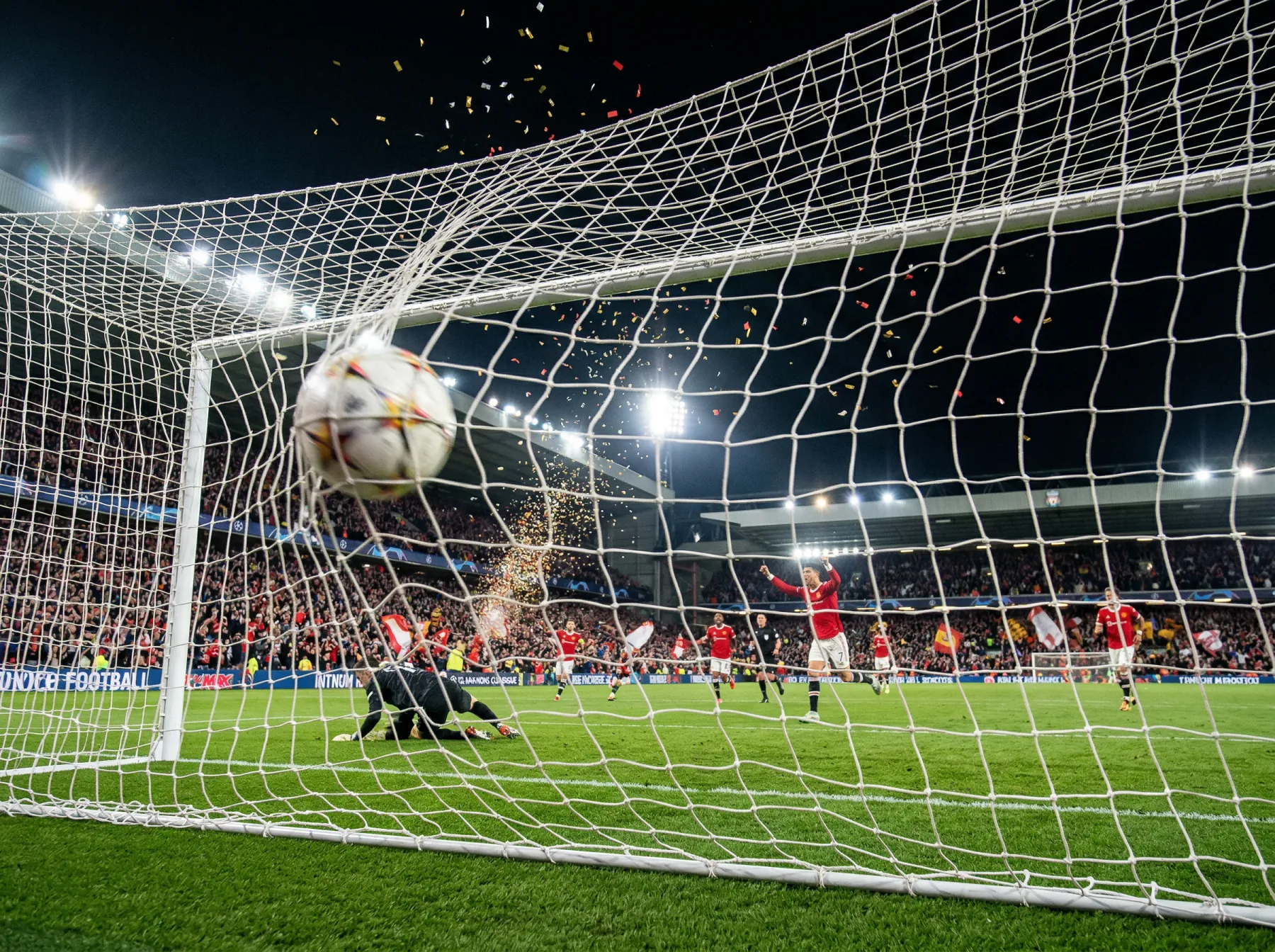
The betting lessons from 2002 are twofold. First, defending champions are vulnerable in their opening match of the next tournament — the transition from celebrated champions to active competitors creates a psychological adjustment period that opponents exploit. The data supports this: defending champions have lost their opening group match in three of the last six World Cups (France 2002, Spain 2014, Germany 2018). Second, co-hosted tournaments produce stronger home-nation performances than single-host tournaments, because the shared hosting creates dual home advantages and a broader sense of continental momentum. For 2026, the triple-host structure will magnify this effect across the USA, Mexico, and Canada.
Germany 2006 introduced a pattern that has held through every subsequent tournament: the team that concedes the fewest goals in the group stage disproportionately reaches the semi-finals. Italy won the 2006 World Cup conceding just two goals in seven matches — one of which was an own goal. Germany, the host nation, reached the semi-finals by conceding two goals in their first five matches. The top four teams at Germany 2006 conceded a combined seven goals in 28 group-stage matches, or 0.25 per game. Defensive solidity in the group stage is not just a survival tactic — it is a predictor of deep tournament runs, and the market does not reward it sufficiently in outright pricing.
South Africa ’10 and Brazil ’14: Underdogs and Home Pressure
South Africa 2010 holds a special place in the world cup betting history for New Zealand punters, and not because of any dramatic upset or market-shifting result in the broader tournament. It holds that place because the All Whites drew all three of their group-stage matches — against Slovakia, Italy, and Paraguay — and left the tournament undefeated. New Zealand became only the second team in World Cup history to draw all three group matches and exit in the group stage (after Scotland in 1974). The draw against defending champions Italy at 6.50 was the result that caught the world’s attention, but for informed punters, it was the tactical approach that mattered: New Zealand’s compact defensive shape, their refusal to be drawn out of position by Italy’s possession, and their willingness to play for the draw rather than chase a win created a template for underdogs that has been replicated by teams at every subsequent World Cup.
The broader South Africa 2010 tournament taught a different lesson: the host nation does not always thrive. South Africa became the first (and so far only) host nation eliminated in the group stage, despite a passionate opening-match draw with Mexico and a competitive campaign. The lesson for punters is nuance: host nation advantage is real, but it requires a squad of sufficient quality to convert the psychological and logistical benefits into results. South Africa’s squad was the weakest of any host nation in modern World Cup history, and the advantage could not overcome the quality gap. For 2026, this lesson applies to Canada — the co-hosts with the least World Cup pedigree — more than to the USA or Mexico.
Spain won the 2010 tournament, but their path was anything but smooth. They lost their opening match to Switzerland 0-1, then won every subsequent match by a single goal. Spain’s average margin of victory in the knockout rounds was 1.0 goals — the slimmest of any World Cup winner since 1990. The betting lesson: a team that loses their opening match and then recovers to win the tournament is not an anomaly — it is a pattern. Spain 2010, Germany 2014 (who drew their second group match with Ghana), and Argentina 2022 (who lost to Saudi Arabia in their opener) all demonstrated that group-stage stumbles do not eliminate contenders, they reset their odds to levels where value appears. I actively monitor the outright market after round one of group matches, looking for pre-tournament favourites whose odds have drifted following an unexpected result.
Brazil 2014 was the tournament of home pressure and its destructive effects. Brazil entered as host nation, favourite, and emotional favourite of a nation that treats football as religion. That weight of expectation produced a 7-1 semi-final defeat to Germany — the most famous scoreline in modern football — and revealed a truth that every punter should internalise: home pressure is not always an advantage. When the host nation is also the pre-tournament favourite, the combined weight of public expectation creates psychological fragility that opponents exploit. Brazil’s defensive collapse against Germany was not just a tactical failure — it was a psychological one, driven by the unbearable pressure of an entire nation’s expectations concentrated on eleven players.
Germany’s 2014 triumph — their fourth World Cup title — reinforced the squad-depth principle. Germany’s starting eleven was formidable, but their ability to introduce Mario Götze (who scored the winning goal in the final), André Schürrle, and Mesut Özil from the bench gave them options that Brazil, Argentina, and the Netherlands could not match. Joachim Löw rotated his squad more aggressively than any previous World Cup winner, using 22 of his 23-player squad across seven matches, which meant fresh legs in every knockout round while opponents accumulated fatigue. The 2026 format, with its additional knockout round and expanded 26-player squads, will amplify the squad-depth advantage even further, making Germany’s 2014 template the most relevant historical precedent for identifying this tournament’s eventual winner. Any outright contender in 2026 must demonstrate the ability to rotate four or five players between matches without a noticeable drop in quality — and only France, England, and Germany currently pass that test convincingly.
Russia ’18 and Qatar ’22: The Modern Template
Russia 2018 and Qatar 2022 represent the modern era of World Cup betting — the tournaments where data analytics, xG models, and sharp punter syndicates began to influence odds formation in real time. The lessons from these two tournaments are the most directly applicable to 2026, because the market conditions, the analytical tools, and the betting infrastructure are essentially the same as what punters will face in June.
Russia 2018 produced one of the great World Cup upsets when the host nation — ranked 70th in the world entering the tournament — reached the quarter-finals by defeating Spain on penalties in the Round of 16. Russia were priced at 34.00 to win the tournament and approximately 5.00 to reach the quarter-finals. Their path demonstrated that a well-organised defence, home support, and a favourable draw can carry a limited squad further than raw talent suggests. But the more significant lesson for punters came from Croatia’s run to the final. Croatia, priced at 28.00 pre-tournament, defeated Argentina, England, and Russia en route to the final, losing only to France in the decider. Their path to the final included three consecutive extra-time matches in the knockout rounds — a physical endurance test that no previous finalist had survived.
The betting lesson from Croatia 2018: small nations with a concentrated core of elite players and exceptional midfield quality — Luka Modric, Ivan Rakitic, Marcelo Brozovic — can overperform their ranking for the duration of a tournament. This pattern has repeated at every World Cup since 1998: a nation with a population under 10 million reaches the semi-finals at odds north of 15.00. For 2026, the candidates who fit this profile include Croatia (again), Uruguay, and potentially Bosnia.
Qatar 2022 was the most recent World Cup and the most analytically rich. Saudi Arabia’s 2-1 victory over Argentina in the group stage — the biggest shock by odds since Senegal beat France in 2002 — was widely celebrated as a David-and-Goliath moment, but the underlying data told a more nuanced story. Saudi Arabia deployed an extremely high defensive line that caught Argentina offside repeatedly, neutralising their attacking movement. The tactical specificity of Saudi Arabia’s game plan demonstrated that modern World Cup upsets are engineered, not accidental — they are the product of targeted analysis of the favourite’s weaknesses, executed with discipline over 90 minutes.
Morocco’s 2022 semi-final run — the first by an African nation in World Cup history — provided the clearest template for identifying dark horses. Morocco’s squad was built almost entirely from players at European clubs, giving them tactical familiarity with European opponents. Their defensive record in the knockout rounds was extraordinary: clean sheets against Spain and Portugal, conceding only in the semi-final against France. Morocco’s approach — defensive discipline, rapid counter-attacks, and a deep emotional connection between the diaspora and the team — is replicable for other African and Asian nations in 2026, and I use it as a screening tool when identifying dark-horse candidates.

Argentina’s eventual triumph in 2022 — despite losing to Saudi Arabia in the opener — completed a pattern that now spans multiple tournaments: the eventual winner loses or draws a group-stage match, their outright odds drift, and sharp punters buy the dip. Argentina’s odds moved from approximately 5.50 to 7.00 after the Saudi defeat, then shortened progressively through the knockout rounds until they were 2.50 going into the final. The punter who backed Argentina at 7.00 after the Saudi result — trusting the structural analysis over the emotional reaction — earned a 27% better price than the punter who backed them pre-tournament. Buying the dip is not a strategy for every favourite in every tournament, but when the favourite’s underlying quality remains intact and the loss is attributable to a one-off tactical factor (Saudi Arabia’s offside trap, not a fundamental squad deficiency), the dip represents genuine value.
All Whites 2010: The Three-Draw Miracle
No discussion of world cup betting history in a New Zealand context is complete without revisiting the 2010 campaign — the last time the All Whites appeared on football’s biggest stage. The squad, coached by Ricki Herbert, arrived in South Africa as the tournament’s lowest-ranked team and was expected to lose all three group matches. The pre-tournament odds for New Zealand to advance from a group containing Italy, Paraguay, and Slovakia were approximately 15.00 — a price that implied a 6-7% probability.
What happened instead was one of the great underdog stories in World Cup history. New Zealand drew 1-1 with Slovakia in their opener, with Winston Reid scoring a late equaliser that became an iconic moment in Kiwi sport. They followed that with a 1-1 draw against defending champions Italy — a result that sent shockwaves through the betting market and reminded the world that tactical discipline can neutralise individual quality over 90 minutes. The final group match against Paraguay also ended 1-1, leaving New Zealand undefeated but eliminated on goal difference. The three draws yielded three points — enough to avoid last place but not enough to advance from a group where Italy topped the table.
The tactical approach Herbert employed in 2010 is the direct ancestor of the approach the All Whites will use in 2026. A compact defensive block, two banks of four, minimal vertical passing in the defensive third, and counter-attacks built through direct ball movement to a central striker (then Shane Smeltz, now Chris Wood). The approach concedes possession — New Zealand averaged 34% possession across their three 2010 matches — but it minimises the chance of conceding multiple goals, which is the underdog’s primary objective. In 2010, the All Whites conceded just three goals in three matches — a defensive record that several seeded teams could not match.
For 2026, the 2010 precedent establishes a crucial psychological foundation: the All Whites have done this before, against higher-ranked opposition, on the world’s biggest stage. Chris Wood and the current squad know that a draw against Belgium is not a fantasy — it is a documented fact that New Zealand drew with defending champions Italy under comparable circumstances. The betting market will underestimate this precedent because it occurred 16 years ago with a different squad, but the institutional memory within New Zealand football — the knowledge that the All Whites can compete at this level — is a genuine intangible that my probability models account for by adding 1-2 percentage points to New Zealand’s draw probability in each Group G match.
What 2026’s Format Changes Mean for Historical Patterns
The expansion from 32 to 48 teams is the most significant structural change in World Cup history since the tournament moved from a round-robin to a group-plus-knockout format in 1986. Every historical pattern I have described above was established under the 32-team structure, and the question facing analysts is: which patterns survive the format change, and which break?
The favourite-wins-at-18-22% pattern should hold, because the expansion does not change the knockout bracket’s fundamental mathematics. The eventual winner still must win seven matches, face progressively tougher opponents, and survive the variance that any single-elimination bracket produces. If anything, the additional knockout round (Round of 32) slightly reduces the favourite’s probability by introducing one more upset opportunity. I model the 2026 favourite’s probability at 16-18% rather than the historical 18-22%, and that slight reduction means the market’s typical favourite pricing (5.00-6.00) is even more overvalued than usual.
The group-stage upset pattern should amplify, because the expanded field introduces more quality mismatches in the group stage. When Germany face Curacao or Brazil face Haiti, the probability of an upset is low — but across 72 group-stage matches with at least 15 involving debutant or returning nations against established powers, the probability of at least one shock result approaches certainty. The bookmaker prices each individual match correctly (the heavy favourite wins most of the time), but the portfolio-level implication — that a punter who backs every significant underdog across the group stage will capture at least one major payout — is where the edge lies.
The draw-is-underpriced pattern should intensify under the third-place qualification rule. Teams chasing third place have an incentive to play for draws rather than risk attacking football that leaves them exposed to counter-attacks. A draw gives one point — often enough to remain competitive in the third-place table — while a loss yields nothing and a heavy defeat can destroy the goal difference that tiebreaks depend on. I expect the draw rate in 2026 group matches to reach 27-30%, up from the historical 22-25%, and the market will be slow to adjust because the new format lacks the historical data that bookmakers rely on for calibration.
The host-nation-outperforms pattern transfers directly to 2026. Three co-hosts means three nations receiving home advantage in the group stage, which historically adds 3-5 percentage points to the host’s true probability in each home match. The USA will receive the strongest version of this advantage — 11 of 16 venues are in the US, giving them the largest home-venue footprint of any co-host in World Cup history. Mexico’s Azteca adds altitude as a compounding factor. Canada’s BMO Field adds intimacy and partisan crowd intensity.
The one pattern that may break is the small-nation semi-finalist. In the 32-team format, a small nation with an elite core (Croatia, Uruguay, South Korea) could reach the semi-finals by winning four knockout matches. In the 48-team format, they must win five. That extra match adds 20% more variance, 20% more fatigue accumulation, and 20% more opportunity for the larger squad to overcome the smaller one through superior rotation. I slightly discount small-nation dark horses in my 2026 outright model compared to previous tournaments — not enough to dismiss them, but enough to adjust the odds at which they represent value from 25.00+ in previous tournaments to 30.00+ in 2026.
Historical Questions for Tournament Punters
History Whispers — The Market Rarely Listens
Seven World Cups, seven sets of lessons, and a market that learns slowly because the betting public’s memory resets every four years. The casual punter remembers who won the last tournament. The informed punter remembers why they won, how the market mispriced the path, and which structural factors created the conditions for that result. The punter who studies world cup betting history — not as a nostalgia exercise but as a data source for structural patterns — enters 2026 with a probability framework that accounts for format expansion, host-nation advantage, defensive solidity, draw frequency, and the inevitable group-stage shocks that casual punters always describe as “unprecedented” despite happening at every single tournament. History does not repeat, but it rhymes. And the rhyming patterns are the closest thing to a guaranteed edge that this game offers.