
Loading...
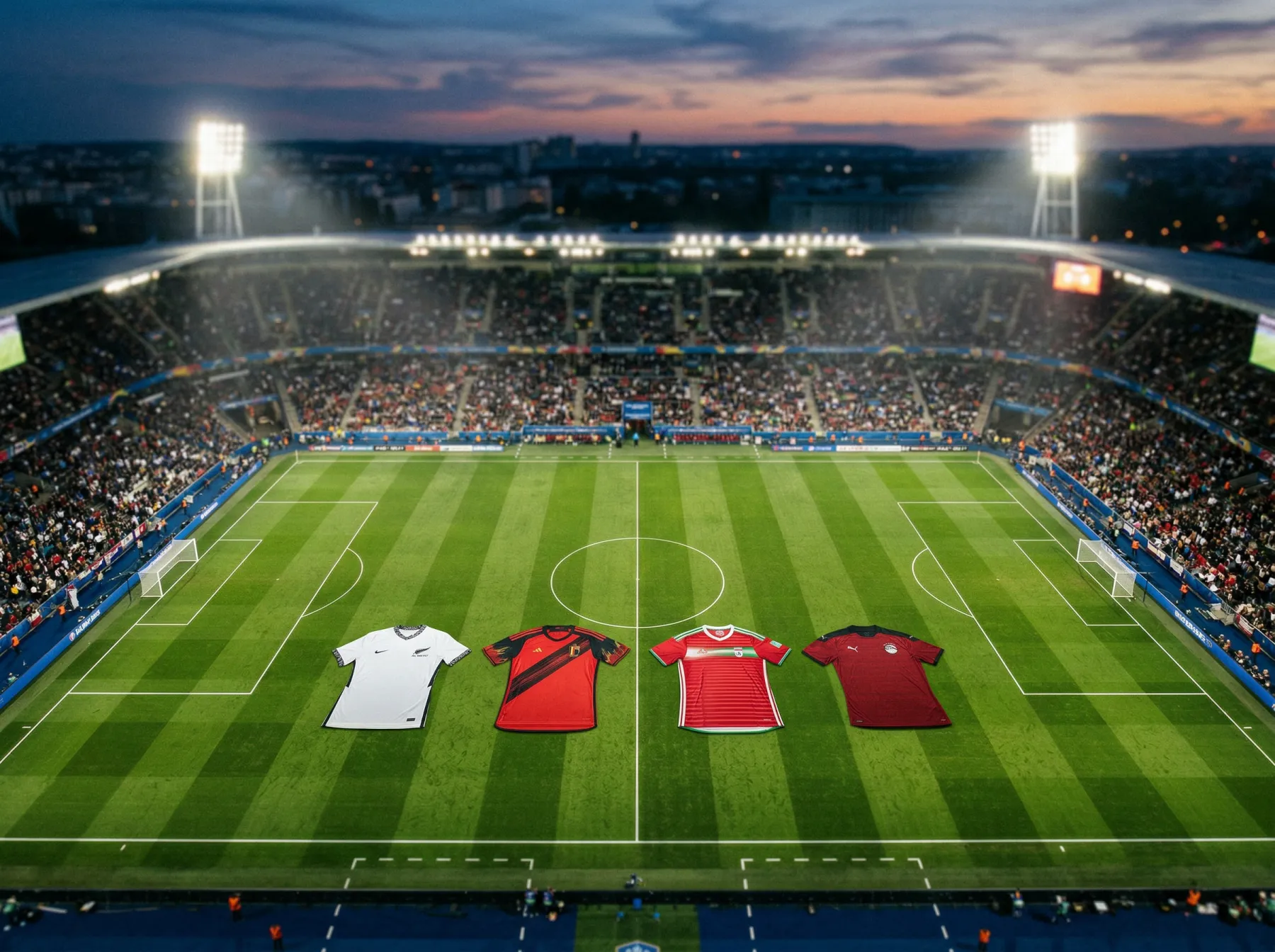
I have covered dozens of World Cup groups across nine years of tournament analysis, and I cannot recall one where a single geopolitical variable could reshape the entire betting landscape overnight. Group G at the 2026 FIFA World Cup is that group. Belgium arrive as heavy favourites carrying the weight of an ageing golden generation, Egypt bring Mohamed Salah and a point to prove after years of near-misses, Iran’s participation remains uncertain due to an ongoing military conflict, and New Zealand — the All Whites — return to the world stage for the first time since their extraordinary three-draw campaign in South Africa. For Kiwi punters, this is the group that matters more than any other, and the market has left gaps wide enough to drive value through.
Every match in Group G takes place on North America’s west coast — Los Angeles and Vancouver — which means kick-off times land between 13:00 and 15:00 NZST. That is a rare luxury at a World Cup, where Kiwi fans usually set alarms for the small hours. The scheduling alone should amplify public interest and TAB turnover on these fixtures, which in turn affects how the odds settle. I will walk through every angle of this group, match by match, and show you exactly where I think the value sits.
The Four Contenders at a Glance
A colleague once told me that the best way to handicap a World Cup group is to forget FIFA rankings entirely and ask one question: which team has the most to lose? In Group G, that team is Belgium. Ranked inside the top ten, stacked with Premier League and European talent, and led by Kevin De Bruyne — Belgium are the side whose reputation takes the biggest hit with a group-stage exit. That pressure is real, and it has undone better squads than this one at past tournaments.
Belgium’s squad depth looks formidable on paper. De Bruyne orchestrates from midfield, Romelu Lukaku remains their all-time top scorer, and Jeremy Doku provides pace on the wing. But this is a group that has been transitioning for two cycles now, and head coach Domenico Tedesco is still searching for the defensive solidity that characterised the 2018 side. Belgium should top Group G, but the margin between comfortable qualification and a nervy final matchday is thinner than the decimal odds suggest.
Egypt represent the most dangerous second seed. Mohamed Salah, even at 34, is one of the five most decisive players in world football. Egypt’s African Cup of Nations pedigree — seven titles, more than any other nation — proves they can perform in tournament settings where pressure builds match by match. Their defensive organisation under manager Hassan Shehata’s successor setup is underrated; Egypt concede few goals against sides outside the top 20. The Egypt-New Zealand fixture on 22 June is, in my estimation, the swing match of the entire group.
Iran’s status is the wildcard I will address in detail below, but the short version is this: FIFA president Gianni Infantino confirmed on 1 April 2026 that Iran will participate, though the FIFA Congress on 30 April in Vancouver could revisit that decision. If Iran play, they bring a physically demanding, defensively compact team that has consistently qualified from Asia’s toughest confederation. If they withdraw, a replacement — likely the UAE — enters a group that suddenly becomes far more navigable for New Zealand.
New Zealand are the underdogs, and I mean that in the most respectful sense. The All Whites qualified directly through the OFC, meaning they have not been tested against top-tier opposition in competitive fixtures for months. Chris Wood — prolific at Nottingham Forest in the Premier League — is the squad’s marquee name and the player around whom tactical plans will revolve. New Zealand’s realistic target is third place, which under the expanded 48-team format could be enough to reach the Round of 32. Eight of the twelve third-placed teams advance, a rule that changes the calculus for every underdog in every group.
Match Schedule in Eastern Time and NZST
When I first saw the Group G schedule, I immediately noticed something that most international previews overlooked: all three New Zealand matches are on the west coast of North America. That is not a coincidence — FIFA grouped OFC and AFC teams into west-coast venue clusters to minimise travel. For punters, the practical impact is significant. Players deal with less jet lag between fixtures, and the time zone advantage for New Zealand fans is genuine.
| Date (ET) | Date (NZST) | Match | Venue |
|---|---|---|---|
| 15 June, 21:00 | 16 June, 13:00 | Iran v New Zealand | SoFi Stadium, Los Angeles |
| 21 June, 21:00 | 22 June, 13:00 | New Zealand v Egypt | BC Place, Vancouver |
| 26 June, 23:00 | 27 June, 15:00 | New Zealand v Belgium | BC Place, Vancouver |
The 13:00 NZST kick-offs for the first two matches fall on weekdays, which means workplaces across New Zealand will have screens running in break rooms and pubs will open early for lunch-hour crowds. The Belgium match kicks off at 15:00 NZST on a Saturday — prime viewing time. TAB NZ’s handle on these fixtures should be substantial, and that volume tends to sharpen the market rather than distort it. I recommend placing any pre-match bets before the week of each fixture, when early money from informed punters has not yet moved the lines.
Match Analysis: Iran v New Zealand
Your first World Cup match in sixteen years, and the opponent might not even be there. That is the bizarre reality facing the All Whites on 16 June at SoFi Stadium. If Iran participate, New Zealand face a side that has qualified for six of the last eight World Cups and whose physical, pressing style is designed to frustrate technically superior opponents. Iran’s approach under their current setup leans heavily on defensive structure — a low block, disciplined shape, and rapid counter-attacks through Mehdi Taremi and Sardar Azmoun if both are available.
For New Zealand, this is the most winnable fixture on paper, regardless of whether Iran or a replacement team takes the pitch. The All Whites’ game plan should centre on controlling possession in midfield and feeding Chris Wood with service from wide areas. Wood’s aerial ability is a genuine weapon at this level — he wins more than 60% of his aerial duels in the Premier League, and Iran’s centre-backs have historically struggled against physically imposing strikers in World Cup settings.
The tactical battle will be fought in the transitions. New Zealand must avoid the trap of sitting deep and absorbing pressure, which is precisely what Iran want opponents to do. If the All Whites can press Iran’s build-up in the first twenty minutes, forcing turnovers in the middle third, they create the kind of half-chances that Wood converts. A draw here is a credible result. A win would be transformative — not just for Group G permutations, but for the psychological momentum heading into the Egypt fixture six days later.
If Iran withdraw and the UAE replace them, the dynamic shifts considerably. The UAE are a competent side but lack Iran’s World Cup experience and defensive resilience. That scenario would make this opening match the clearest path to three points for New Zealand, and the odds would compress rapidly once a replacement is confirmed.
Match Analysis: New Zealand v Egypt
I have spent more time analysing this single fixture than any other in Group G, because I believe it is the match that determines whether New Zealand’s 2026 World Cup is a footnote or a chapter. Egypt at BC Place on 22 June is the six-pointer — the game where both teams are likely fighting for the same third-place lifeline.
Egypt’s threat is obvious and singular: Mohamed Salah. At 34, Salah’s pace has diminished fractionally from his Liverpool peak, but his positional intelligence, finishing, and ability to create something from nothing remain elite. New Zealand’s right-sided defender will face the most demanding 90 minutes of his career. Egypt’s tactical setup funnels play through Salah’s channel, using overlapping runs from the left-back to create two-on-one situations that even top European defences struggle to handle consistently.
But Egypt are not a one-man team, and that is actually where New Zealand might find an edge. When opponents commit to doubling up on Salah, Egypt’s other attacking players — typically a central striker and an opposite winger — receive the ball in less dangerous positions. Egypt’s creativity drops noticeably when Salah is well-marshalled and the supply chain is disrupted. New Zealand’s midfield pressing will be critical: if they can cut passing lanes into Salah’s zone and force Egypt to build through the centre, the match becomes far more competitive than the odds imply.
The venue matters enormously. BC Place is an indoor stadium with a retractable roof and artificial turf — conditions that neutralise one of Egypt’s traditional advantages, which is playing in heat and open-air conditions that sap European-based opponents. Under the roof in Vancouver’s mild June weather, the playing field is more level than it would be at an outdoor venue in Texas or Florida. New Zealand’s players, several of whom play in the UK and Australia, will be comfortable in these conditions. Egypt’s squad, predominantly based in European leagues, will also adapt quickly — but the point is that neither side gains a climate edge. The match comes down to execution.
A draw against Egypt would be an acceptable result for New Zealand, but only if they have already taken points from Iran. If New Zealand lose the opener, this match becomes a must-win, and that desperation can lead to tactical overcommitment and defensive exposure. The sequencing of results matters — and it is one reason I recommend watching the Iran match closely before committing heavily to the Egypt fixture market.
Match Analysis: New Zealand v Belgium
Nobody expects New Zealand to beat Belgium. I want to state that plainly, because the honesty is important for how you approach this bet. Belgium’s squad depth, international experience, and individual quality make them prohibitive favourites in this fixture. At BC Place on 27 June, the All Whites face a team that reached the World Cup semi-finals in 2018 and the quarter-finals in 2022. The gap in quality is real.
What makes this fixture interesting for punters is not the match result market — it is the handicap and total goals markets. Belgium have a historical tendency to ease off once qualification is secured. If Belgium have already beaten Egypt and Iran in their first two matches, the third group game becomes a dead rubber where Tedesco rotates his squad and rests key players for the knockout rounds. In that scenario, New Zealand face a weakened Belgium side, and the handicap line tightens considerably.
The over/under goals market also deserves scrutiny. Belgium’s recent tournament record shows they score freely in group stages — 9 goals in three group matches at the 2018 World Cup, 4 in three at 2022. But they also concede when they switch to cruise control. If Belgium are already through, a match that finishes 2-1 or 3-1 is more likely than a 4-0 demolition. The total goals line set above 2.5 has historically paid out in Belgium’s dead-rubber group fixtures at a rate that exceeds implied probability.
For the All Whites, this match is also about legacy. Even a single goal against Belgium — a Chris Wood header from a set piece, a counter-attack finished by a substitute — would echo through New Zealand football history. The 2010 squad drew with Italy, and that result is still celebrated. A goal against Belgium, even in defeat, would give this 2026 generation their own moment. I mention this not as sentiment but as a tactical observation: New Zealand will throw bodies forward in the final twenty minutes regardless of the scoreline, and that late attacking intent creates opportunities in the live betting markets.
The Iran Variable: What Happens If They Withdraw?
Geopolitics rarely intersects with World Cup betting in a way that directly affects group odds, but 2026 is the exception. The military conflict between Iran and the US/Israel coalition, which escalated following the killing of Ayatollah Khamenei in airstrikes, has placed Iran’s participation in genuine doubt. The Iranian Football Federation has publicly expressed concerns about sending players to a tournament hosted partly in the United States, a country actively engaged in military operations against Iran.
FIFA president Gianni Infantino’s statement on 1 April 2026 — “Iran will be at the World Cup” — provides the current baseline, but the FIFA Congress on 30 April in Vancouver could reverse that position. The timeline is tight: if Iran withdraw before 30 April, FIFA has six weeks to slot in a replacement from the AFC, most likely the UAE as the highest-ranked unsuccessful qualifier. If Iran withdraw after squads are announced in late May, the logistical complications multiply.
For punters, the Iran variable creates a clear fork in strategy. If Iran play, Group G is a four-team contest where third place requires roughly 3-4 points. If Iran withdraw and the UAE replace them, the group becomes slightly easier for New Zealand, though the UAE are no pushovers — they reached the Asian Cup semi-finals in 2024. The more disruptive scenario is a late withdrawal that leaves Group G with only three teams, which would require FIFA to restructure the schedule and could void existing group-stage bets depending on your operator’s terms. I strongly recommend checking TAB NZ’s void/postponement policy on Group G fixtures before placing any bets. This is not standard tournament risk — it is an identifiable, foreseeable variable that should factor into your staking decisions.
Group G Odds and Value Picks
When I pulled up TAB NZ’s early group markets in March, one number jumped off the screen: New Zealand to finish third in Group G was priced around 3.40 in decimal odds. That implies roughly a 29% probability. My own model, which weights qualification route, squad quality, and the Iran uncertainty, puts New Zealand’s third-place probability closer to 38%. That is a meaningful gap — roughly 9 percentage points of edge — and it is the kind of discrepancy that does not last once tournament hype builds and casual money flows into the market.
Belgium to top the group is priced short, typically around 1.55, and I see no reason to fight that number. Belgium should win this group. The value is not in backing the favourite but in dissecting the margins between second and third. Egypt to finish second is priced around 2.10, and that feels approximately correct — perhaps slightly short given the Iran wildcard. If Iran withdraw, Egypt’s path to second becomes almost certain, and the odds will collapse. If Iran play, Egypt face a genuine contest for second place, and 2.10 offers thin margin.
The match odds are where I find the sharpest angles. Iran v New Zealand (or replacement v New Zealand) is a fixture where the draw is typically priced between 3.20 and 3.50. In the opening matches of World Cups, draws occur at a higher rate than the market implies — across the last four tournaments, roughly 28% of opening group-stage fixtures ended level, compared to the 20-22% implied by typical draw odds. A NZ$25 stake on the draw at 3.40 returns NZ$85 and aligns with the historical pattern of tight, cagey opening fixtures where neither team wants to lose.
New Zealand v Egypt draw is the bet I have circled most emphatically. Both teams will approach this match knowing that a draw keeps them alive for third place. Egypt will be cautious against an opponent they should beat but cannot afford to underestimate. New Zealand will defend deep and look to hit on the counter. The draw in this fixture is the outcome that makes strategic sense for both sides, and that convergence of tactical interest is exactly the kind of edge that tournament betting rewards.
For the Belgium match, the Asian handicap market offers the best route. Belgium -1.5 is the standard line, but if Belgium have already qualified, look for Belgium -1.0 at reduced odds — the smaller handicap accounts for squad rotation. Alternatively, New Zealand +1.5 on the Asian handicap is a bet on the All Whites keeping the scoreline respectable, which their defensive setup and the indoor conditions at BC Place make plausible.