
 Available in US
Loading...
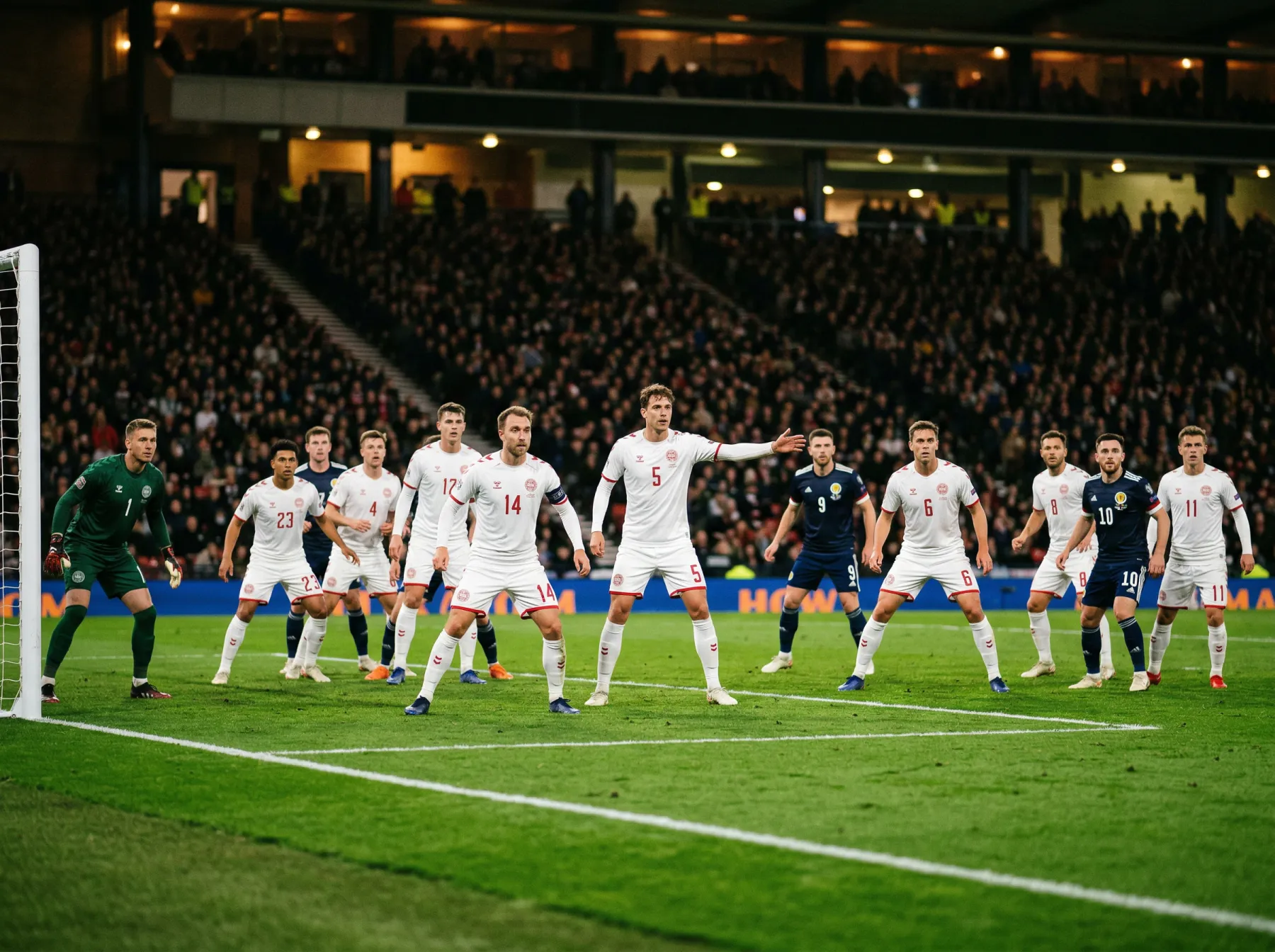
Egypt are the team NZ punters should study most carefully — this is the match that decides everything. Forget Belgium, who will likely beat New Zealand regardless of preparation. Forget Iran, whose participation remains uncertain. The Egypt versus New Zealand fixture on 22 June at BC Place in Vancouver is the match that determines whether the All Whites advance as a best third-placed team or go home after three matches. And to assess that fixture properly, you need to understand exactly what Egypt bring to the 2026 World Cup.
Mohamed Salah will be 34 when the tournament begins. This is almost certainly his final World Cup, and the weight of an entire nation’s footballing ambition rests on his shoulders in a way that few players at this tournament will experience. Egypt’s 110 million people are not casual about football — it is the national obsession, the one arena where the country competes on the global stage with genuine belief. Salah at a World Cup is not just a sporting event for Egypt. It is a cultural moment.
The Road from Africa
African qualifying for the World Cup is a bruising, chaotic, and occasionally brilliant process that deserves more respect than it receives from European-centric football media. Egypt navigated a qualification pathway that included matches played at altitude, in extreme heat, on pitches that would make a groundskeeper weep, and against opponents who treated every fixture as a cup final. The idea that qualifying through CAF is easier than qualifying through UEFA is a fiction that only people who have never watched African football believe.
Egypt’s path through the group stage of qualification was largely smooth — they topped their group with a combination of Salah’s individual brilliance and a defensive structure that conceded fewer goals than any other group winner in the African qualifiers. The final round was tighter, requiring composed performances in high-pressure away fixtures and a nervy home leg that demanded defensive discipline above all else.
What stood out across the entire campaign was Egypt’s ability to grind results in hostile environments. The squad is accustomed to playing in front of enormous crowds in Cairo, but they also showed composure in stadiums where the atmosphere was designed to intimidate. Away wins in difficult conditions are a strong predictor of World Cup group-stage performance, and Egypt’s qualifying record in that regard is among the best of any African qualifier. The mental toughness developed through CAF qualifying translates directly to the pressure of a World Cup group stage, where every match is a one-off event with consequences that compound across three fixtures.
Key Players: Salah and Beyond
Every analysis of Egypt starts and ends with Salah, and for good reason. His career numbers are staggering — hundreds of goals across the Premier League, Champions League, and international football, a trophy cabinet that includes league titles, European cups, and individual awards that place him among the finest players of his generation. At the 2026 World Cup, Salah will carry the expectation of being the tournament’s most influential African player, and if his form at club level in the months before the tournament is any guide, he remains capable of deciding matches single-handedly.
But building an entire World Cup analysis around one player, however brilliant, is a mistake that costs punters money at every tournament. Egypt’s squad is deeper and more tactically sophisticated than the “Salah plus ten” narrative suggests. The midfield contains players who compete regularly in top European leagues and the Saudi Pro League — which, whatever its reputation, has attracted a level of talent that makes it a reasonable competitive environment. The defensive line is Egypt’s real strength: centre-backs who communicate seamlessly, full-backs who prioritise defensive duties, and a goalkeeper who has been tested in high-stakes knockout football through AFCON campaigns.
The players around Salah are tasked with a specific function: protect the defensive shape, win the ball back in midfield, and get it to Salah as quickly as possible in transition. It is a system that relies on discipline from ten players so that one player has the freedom to express his talent. At club level, Salah operates within a more balanced structure. For Egypt, the team is explicitly built to serve him, and the tactical simplicity of that approach is both a strength and a limitation. When Salah is marked out of the game — doubled up on, denied space to run into — Egypt’s Plan B is considerably less threatening.
The striker situation is worth watching closely. Egypt’s options beyond Salah for goals from open play are limited. The centre-forward role has been a revolving door in recent campaigns, with no single player establishing the kind of consistent goalscoring record that Salah provides from the wing. Set pieces offer an alternative route to goal — Egypt are strong on corners and free kicks, and their aerial presence in the box is a genuine weapon. But in terms of individual goalscoring threat from open play, Salah is the entirety of the plan, and opponents know it.
Group G Through Egyptian Eyes
From Cairo, Group G looks like an opportunity. Egypt’s coaching staff will have analysed the draw and concluded — correctly, I believe — that this is one of the more favourable groups they could have landed in. Belgium are a clear step above, but there is no France, no Argentina, no Brazil to contend with beyond the group leaders. The path to second place, or a competitive third-place finish that could secure Round of 32 qualification, is entirely navigable.
Egypt’s approach to the group will be shaped by the match sequence. They open against Belgium — the toughest fixture first. A draw against Belgium would be a significant result and would set up the remainder of the group perfectly. A loss, even a narrow one, is not catastrophic given that the New Zealand and Iran matches follow. Egypt’s coaching staff will treat the Belgium opener as a damage-limitation exercise: stay compact, deny space, frustrate De Bruyne, and if an opportunity arises through Salah’s pace on the counter, take it.
The second match against New Zealand is where Egypt’s tournament is decided. Both teams will arrive at this fixture knowing that the result likely determines third place. Egypt’s tactical advantage is clear — they have more individual quality across every position, more experience in competitive international football, and a talisman in Salah who can produce a decisive moment from nothing. New Zealand’s advantage is psychological: they have nothing to lose, they will be playing in front of a supportive crowd at BC Place (where the All Whites play two of their three matches), and they carry the emotional weight of a nation that punches above its weight in underdog narratives.
Against Iran (or a replacement), Egypt should have enough quality to take all three points. The tactical matchup favours Egypt regardless of whether they face Iran’s physical approach or a potential replacement’s different style. This match serves as the insurance policy — even if the Belgium result goes badly and the New Zealand match is tight, a win against the fourth team in the group should accumulate enough points for a strong third-place standing.
Egypt vs New Zealand: The Match That Matters Most
I have already flagged this fixture as the pivotal moment for New Zealand’s campaign, but it deserves detailed treatment from the Egyptian side of the equation too. When I model this match, the data tells an interesting story: Egypt are favourites on paper, but the margin is narrower than most casual observers would expect.
Egypt’s defensive record in qualification is outstanding, but they faced limited opposition capable of sustained pressure. New Zealand’s attacking approach — direct balls to Chris Wood, set-piece deliveries targeting aerial advantage — presents a different challenge than most African opponents offered during qualifying. Wood in the air against Egypt’s centre-backs is a genuine contest, not a foregone conclusion, and New Zealand’s set-piece routines are designed specifically to exploit this kind of matchup.
Salah against New Zealand’s full-backs is the opposite equation. New Zealand’s defenders are competent professionals who play in leagues several tiers below the Premier League. Asking them to contain Salah one-on-one for 90 minutes is asking for trouble, and New Zealand’s coaching staff know it. The tactical solution will be to double up on Salah’s flank, which creates space elsewhere — and whether Egypt’s other attackers can exploit that space is the key variable.
My expectation for this match is a cagey, low-scoring affair. Both teams will recognise the stakes, both will prioritise not losing over chasing a win, and the match will likely be decided by a single moment of quality — a Salah run, a Wood header, a set-piece conversion. The draw is the most probable outcome in my model, and the 0-0 and 1-1 scorelines dominate the probability distribution. For punters, the under 2.5 goals line and the draw no bet market offer the most rational entry points.
The psychological dimension is worth considering too. Egypt have a history of tight, tense tournament matches that go to the wire — their AFCON campaigns are full of 1-0 wins, penalty shootout dramas, and defensive masterclasses under pressure. New Zealand’s 2010 World Cup legacy is built on three draws. Both teams are culturally comfortable with low-scoring, defensive football. When two teams share that mentality and meet in a match where a draw suits both sides’ broader objectives, the draw becomes not just a probability but an alignment of incentives.
Odds and Value Assessment
Egypt’s outright odds to win the World Cup are long enough to be ignored — they are not winning the tournament, and no serious analyst would suggest otherwise. Where Egypt become relevant for punters is in the group-stage markets, the “to qualify” markets, and the individual match outcomes within Group G.
Egypt to finish second in Group G is the market where I see the clearest value. The current pricing underestimates Egypt’s defensive solidity and overestimates the threat from Iran (or a replacement). Egypt’s probability of finishing second, based on my model, is higher than the implied probability from TAB NZ’s decimal odds. That gap represents genuine value — not transformative, but consistent with the kind of edge that accumulates over multiple bets across a tournament.
In the individual match markets, the Egypt versus Belgium fixture offers limited value — Belgium are appropriately priced as strong favourites. The Egypt versus New Zealand match is where the interesting odds sit. Egypt as slight favourites with a significant draw probability creates a market where the draw pays well relative to its actual likelihood. And in the goals markets, under 2.0 goals in the Egypt-New Zealand match is the single strongest statistical play I can identify in the entire Group G fixture set.
Salah’s individual markets — top group scorer, anytime goalscorer in specific matches, total goals across the tournament — are priced with a “name tax” that reduces value. The market knows Salah is Egypt’s primary threat and prices accordingly. Where Salah offers value is in the less obvious markets: first goalscorer (where the odds are more generous), or goal and assist combinations where Salah’s all-round contribution is underweighted. For Kiwi punters comfortable with player prop markets, Salah’s versatility across multiple statistical categories creates opportunities that pure goalscorer markets do not.
What Egypt Mean for Your Group G Strategy
Egypt at the 2026 World Cup are not a neutral’s dream team. They will not play expansive, attacking football that lights up highlight reels. What they will do is compete ferociously in every match, defend with the organisation of a team that has been forged through the intensity of African qualifying, and rely on Salah to produce the moments of individual brilliance that turn draws into wins. For Kiwi punters, understanding Egypt is not optional — it is the foundation of any intelligent Group G betting strategy. The match between New Zealand and Egypt will be tight, tense, and decided by fine margins. Position yourself accordingly.
