
 Available in US
Loading...
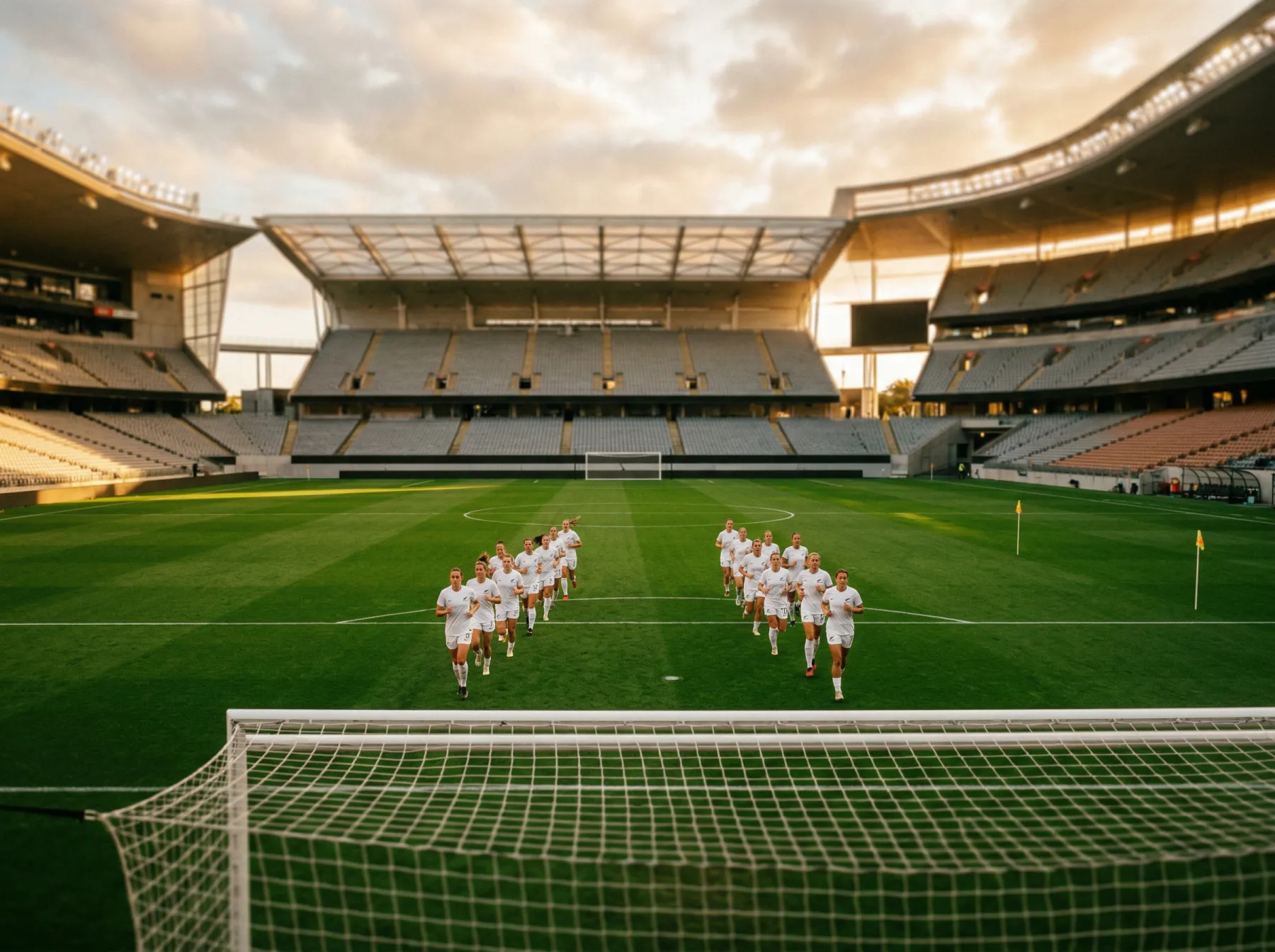
I was in Nelspruit on 24 June 2010 when Ryan Nelsen threw himself in front of a Paraguayan shot, and the All Whites held on for their third consecutive draw at a World Cup. Nobody in that stadium — not the handful of travelling Kiwi supporters, not the bewildered locals — expected New Zealand to leave South Africa unbeaten. Sixteen years later, the All Whites are back, and Group G at the 2026 World Cup is more navigable than the odds suggest.
This is a squad that qualified directly through OFC, earned its place without a playoff lottery, and landed in a group where only Belgium carries genuine favourite status. Egypt are strong but beatable. Iran’s participation remains uncertain. For a nation where rugby dominates every back page, the All Whites at the 2026 World Cup represent something rare — a genuine moment of footballing possibility that an entire country can rally behind.
I have spent nine years covering international tournament wagering, and I can tell you this: the market consistently misprices underdogs who carry a clear tactical identity and a squad built around one elite goalscorer. New Zealand tick both boxes.
How They Got Here: The OFC Road
Qualifying through Oceania looks simple on paper until you remember that the OFC pathway has tripped up New Zealand before. In 2018, the All Whites fell to Peru in an intercontinental playoff. In 2022, they never even reached that stage. This time, the expanded 48-team format gave OFC a guaranteed direct slot, and New Zealand seized it with a campaign that was more convincing than the confederation’s modest reputation implies.
The OFC Nations Cup served as the qualification tournament, and New Zealand swept through it without dropping a match. Twelve goals scored in the group stage, only one conceded across the entire tournament. The semi-final against Papua New Guinea was tighter than expected — a 1-0 grind that tested the squad’s defensive discipline. The final was more comfortable, but the pattern was clear: this is a team that does not concede cheaply.
The criticism is obvious and fair. Beating Solomon Islands and Fiji does not prepare you for Belgium or Egypt. OFC remains the weakest confederation by a considerable distance, and any honest assessment of New Zealand’s qualification must acknowledge that gap. But what OFC qualifying did reveal was a squad that follows a system, defends as a unit, and relies on Chris Wood to convert the half-chances that matter. Those traits travel to any level of competition.
The coaching staff used the qualification campaign to settle on a first-choice eleven and test tactical adjustments against varying styles of opposition. The back four, the midfield shape, the pressing triggers — all were refined during those OFC matches. By the time the group stage arrives in June, New Zealand will have spent more structured preparation time together than several of their Group G rivals, and in tournament football, cohesion often outweighs individual talent.
The Squad: Key Players and the Chris Wood Factor
Every tournament squad has a player around whom the entire plan orbits. For New Zealand, that player is Chris Wood, and the gap between Wood and the rest of this squad is wider than almost any other team at the 2026 World Cup. This is not a weakness — it is a tactical reality that the coaching staff have embraced rather than tried to disguise.
Wood’s record at Nottingham Forest speaks for itself. He has operated as a consistent Premier League goalscorer for years, holding his own against centre-back pairings that would comfortably start for most nations at this tournament. His aerial ability is elite — not good, elite — and his positioning inside the box belongs to a player who has spent over a decade learning where the ball will land before it gets there. At the World Cup, where clear-cut chances are scarce and set pieces decide matches, Wood’s skill set is perfectly suited to the stage.
Behind Wood, the squad draws from a mix of leagues. Several players ply their trade in Australia’s A-League, others in lower divisions of European football, and a handful hold positions at Championship or mid-table clubs across various leagues. The goalkeeper situation is solid without being spectacular — New Zealand have historically produced reliable keepers, and the current number one has enough international experience to handle the pressure of a World Cup group stage.
The midfield is where New Zealand’s limitations become most visible. There is no creative playmaker capable of unlocking a deep defensive block with a single pass. Instead, the midfield functions as a collective — disciplined, hardworking, and designed to win the ball back quickly and move it forward to Wood as directly as possible. In a World Cup context, where possession against stronger teams may hover around 35-40%, this directness is not a flaw. It is a survival mechanism that can produce results.
The defensive unit deserves attention. The centre-back partnership has developed genuine understanding through the qualification campaign, and the full-backs are asked to defend first and contribute forward second — a pragmatic approach that suits the personnel available. Set-piece defending has been a focus, which matters enormously in tournament football where dead-ball situations account for roughly a third of all goals.
Depth is the concern. If Wood picks up an injury, the drop-off in goalscoring threat is severe. If the first-choice centre-back pairing is disrupted, the replacements represent a significant step down in quality. New Zealand need their key players fit and available for all three matches — there is no Plan B that carries the same level of conviction as Plan A.
Tactical Identity: What to Expect on the Pitch
Watch New Zealand in any competitive match over the past two years and you will see the same thing: a compact 4-4-2 that morphs into a 4-5-1 without the ball, with Wood dropping slightly to link play and then attacking the box when crosses arrive. It is not complicated. It is not meant to be. The beauty of this system lies in its repeatability — every player knows their role, every transition is rehearsed, and the shape barely changes regardless of the opponent.
Defensively, New Zealand sit in a mid-block rather than pressing high. Against Belgium, they will drop even deeper, conceding territory in the middle third and packing the defensive third with eight or nine players when the ball enters the final quarter of the pitch. The objective is simple: deny space between the lines, force wide play, and deal with crosses. Against Egypt and Iran (or a potential replacement), the block will sit slightly higher, with the midfield tasked to press the opposition’s first line of build-up.
On the ball, transitions happen quickly. The goalkeeper and centre-backs are instructed to go long when Wood is in a favourable position, bypassing the midfield entirely. When that direct route is not available, the full-backs recycle possession and the midfielders look for diagonal balls into the channels. Set pieces — both attacking and defensive — have been drilled extensively. Corner routines targeting Wood’s aerial dominance are a genuine weapon, and opponents who fail to account for them will pay.
The risk in this approach is obvious: if New Zealand fall behind early, the system offers limited tools for chasing a game. There is no wide playmaker to stretch a defensive line, no dribbler to create something from nothing. Late substitutions will bring energy but not a tactical shift. The All Whites need to stay in matches — keep the scoreline tight until the final twenty minutes — and then rely on moments of quality from Wood or a set-piece delivery to produce a result.
Group G Decoded: Belgium, Egypt, Iran (or a Replacement)
Group G is a study in contrasts. One clear favourite, one solid African contender, one wildcard, and one underdog with nothing to lose. For New Zealand, the draw could have been significantly worse. There is no South American giant here, no host nation riding a wave of home support, no established World Cup pedigree beyond Belgium. This is a group where third place — and a potential Round of 32 spot — is a realistic target.
Belgium arrive as the presumptive group winners, and I see no reason to argue. Kevin De Bruyne, Romelu Lukaku, Jérémy Doku — the squad retains enough quality to handle Group G even if the “golden generation” narrative has begun to fray. Belgium’s weakness, if you can call it that, is motivation in dead-rubber group matches. If they win their first two games convincingly, the third match against New Zealand in Vancouver could see a rotated squad. That scenario is worth filing away.
Egypt are the team that New Zealand’s campaign hinges on. Mohamed Salah makes any side dangerous, and Egypt’s defensive structure — honed through African qualifying — is among the tightest outside of Europe and South America. The match between New Zealand and Egypt on 22 June at BC Place is, bluntly, the most important football match in New Zealand’s history since that Paraguay draw in 2010. Win or draw, and the path to a best-third-place finish opens wide. Lose, and the tournament is likely over.
Iran Situation: The Wildcard
Iran’s participation hangs on geopolitics that extend far beyond football. Following the military conflict with the United States and Israel, and the death of Ayatollah Khamenei in airstrikes, the Iranian Football Federation has publicly expressed doubts about attending a tournament hosted on American soil. FIFA president Gianni Infantino confirmed on 1 April 2026 that Iran will participate and matches will proceed as scheduled, but the FIFA Congress on 30 April in Vancouver could revisit that decision. If Iran withdraw, the likely replacement from AFC would be the UAE, which would alter the group dynamic significantly — the UAE present a less physically imposing but more technically polished challenge than Iran.
For punters, the Iran variable creates a unique pricing situation. Bookmakers have set group odds based on four teams, but there is a non-trivial probability that one of those teams changes entirely before a ball is kicked. Any odds taken now on Group G outcomes carry that embedded uncertainty, and the market has not fully priced it in.
Match Schedule and Kick-Off Times (NZST)
All three of New Zealand’s group matches take place on the west coast of North America — Los Angeles for the opener and Vancouver for matches two and three. This geographical clustering is a genuine advantage for the squad, minimising travel between games and allowing the team to establish a base camp in the Pacific Northwest.
The first match against Iran (or a replacement) kicks off on 16 June at 13:00 NZST at SoFi Stadium in Los Angeles. It is a Monday afternoon in New Zealand — not ideal for live viewing, but far better than the middle-of-the-night slots that plagued Kiwi fans during the Qatar World Cup. The second match against Egypt falls on 22 June at 13:00 NZST at BC Place in Vancouver. The third match against Belgium is on 27 June at 15:00 NZST, also at BC Place.
For Kiwi punters, the timing matters beyond just watching. Betting markets for individual matches become most liquid in the 24-48 hours before kick-off, and having matches fall during New Zealand business hours means you can assess team news, weather conditions, and late market movements in real time rather than relying on overnight shifts. The west coast schedule is, frankly, the best possible outcome for New Zealand-based bettors.
All Whites Odds: Third Place Is the Target
I pulled up the current TAB NZ odds for Group G and the numbers tell a predictable story: Belgium are heavily favoured to top the group, Egypt are second favourites, and New Zealand sit as clear outsiders. But the 48-team format has introduced a wrinkle that most casual punters overlook — eight of twelve third-placed teams advance to the Round of 32. That changes the entire calculus for a team like New Zealand.
In the old 32-team format, finishing third in a group of four meant elimination. Now, finishing third is a genuine pathway. To qualify as a best third-placed team, New Zealand likely need four points from three matches — a win and a draw, or three draws. Given the squad’s defensive discipline and the 2010 precedent of three consecutive draws, that target is not fanciful. It is the explicit strategic goal.
The outright match odds for New Zealand versus Iran sit in the range where value can be found if you believe — as I do — that Iran’s squad will be affected by the geopolitical situation regardless of whether they ultimately participate. Preparation disruption, player availability concerns, and the psychological weight of competing in the United States under these circumstances all work against Iran. New Zealand’s odds in that match look generous.
The Egypt match is priced closer to a coin flip in terms of draw probability, and I think the draw is the most likely outcome. Both teams will approach this match knowing that a point could be enough for a third-place qualification, which tends to produce cautious, low-scoring football. The over/under goals line for this match should sit at 2.0 or lower, and the under looks attractive.
Against Belgium, New Zealand are massive underdogs, and the outright match result market does not offer value. Where the value sits is in the handicap and goals markets — specifically, Belgium to win by exactly one goal, or the match total to stay under 2.5 goals. Belgium’s record in group-stage matches against lower-ranked opponents at recent World Cups includes several 1-0 and 2-0 results. They control matches without chasing big scorelines, and New Zealand’s defensive structure will make Belgium work for every goal.
2010 Flashback: Three Draws and a Legend
Every Kiwi football fan over the age of twenty remembers the 2010 World Cup, and if you were not a football fan before those three matches in South Africa, you became one. New Zealand drew 1-1 with Slovakia, 1-1 with defending champions Italy, and 0-0 with Paraguay. Three matches, three draws, zero defeats, and an exit from the tournament with their heads higher than some teams that advanced to the knockout rounds.
The Italy result remains one of the great World Cup stories. Shane Smeltz scoring the opener against the reigning world champions, the entire nation pausing to watch, and the All Whites holding on until a controversial penalty levelled the score. Italy went home in the group stage. New Zealand went home unbeaten. The symmetry was delicious then, and it carries resonance now.
What 2010 proved — and what applies directly to 2026 — is that New Zealand can compete at World Cup level when the tactical approach is right. Ricki Herbert’s team in 2010 defended deep, stayed compact, and made themselves extraordinarily difficult to break down. The current squad, built around similar principles, has the defensive solidity to replicate that approach. The difference is the attacking threat: Chris Wood in 2026 is a more potent goalscorer than anyone available to Herbert in 2010.
The emotional weight of 2010 matters too. This squad knows what the All Whites achieved sixteen years ago. Several players have spoken publicly about watching those matches as children, about the Italy result being the moment they decided to pursue football seriously. That narrative thread — the next generation carrying the torch — is powerful, and it creates a psychological foundation that pure talent alone cannot replicate. When New Zealand step onto the pitch at SoFi Stadium for that opening match, they will carry an entire country’s memory of what is possible.
The All Whites’ Place in the Vault
Nine years of covering World Cup markets have taught me to look for teams that the public undervalues and the data supports. The All Whites at the 2026 World Cup fit that profile precisely. A clear tactical identity, an elite focal point in Chris Wood, a favourable match schedule, and a group where third place is genuinely attainable — these are the ingredients that produce value in tournament betting.
New Zealand will not win the World Cup. They almost certainly will not top Group G. But the All Whites can do what they did in 2010 — compete with pride, frustrate more talented opponents, and give every Kiwi punter a reason to care about football for three glorious weeks in June. And in the betting markets, that combination of low expectations and genuine capability is where insiders find their edge.
