
 Available in US
Loading...
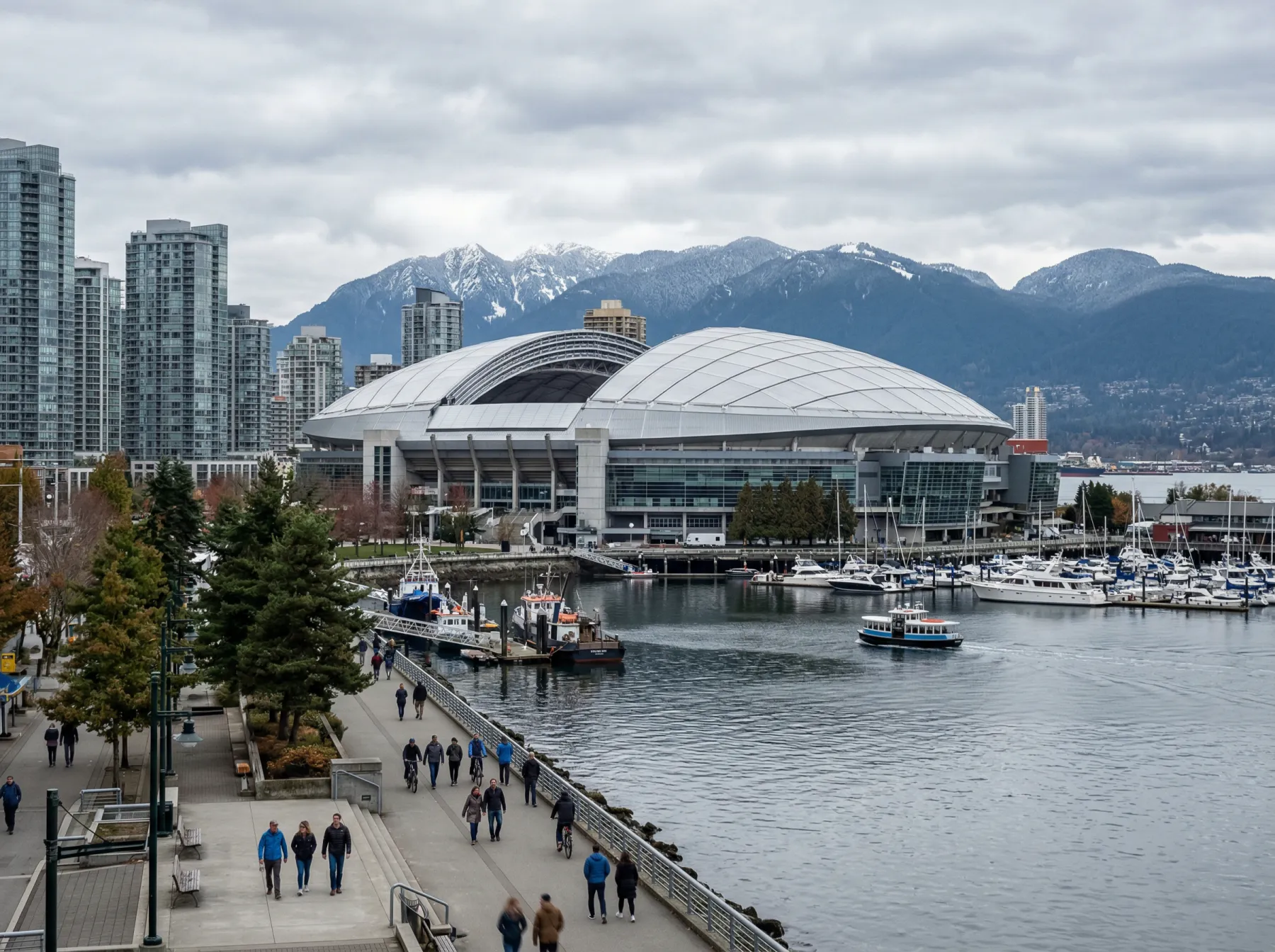
Two out of three. That is the number that matters for every Kiwi punter following the All Whites at the 2026 FIFA World Cup. Two of New Zealand’s three group-stage matches take place inside BC Place in Vancouver — the Egypt fixture on 22 June and the Belgium fixture on 27 June — making this retractable-roof arena on the shores of False Creek the closest thing the All Whites have to a home ground in North America. I have been inside BC Place for MLS matches and international friendlies, and the venue has a quality that few North American stadiums possess: intimacy. The 54,500-seat bowl concentrates sound in a way that makes even modest crowds feel imposing. For a New Zealand side that will rely on every marginal advantage, the familiarity of playing consecutive matches at the same venue is worth more than most pundits realise.
About BC Place
Opened in 1983, BC Place is the oldest stadium in the 2026 World Cup venue portfolio — and that age tells a story of constant reinvention rather than decline. The original air-supported fabric roof, which gave the stadium its distinctive bubble shape, was replaced in 2011 with the largest cable-supported retractable roof in the world. That renovation transformed BC Place from a dated multipurpose arena into a modern venue capable of hosting elite international football in any weather conditions. The retractable roof opens and closes in approximately 20 minutes and spans the entire pitch and seating bowl, meaning FIFA has the option of staging matches in either open-air or enclosed conditions depending on weather forecasts.
The stadium sits in downtown Vancouver, directly adjacent to the waterfront district of False Creek. That central location is a significant logistical advantage for both teams and fans — hotels, public transit and the city’s restaurant infrastructure are all within walking distance. For the All Whites’ support staff, having the stadium, training facilities and team hotel within a compact urban footprint minimises transit time and maximises recovery between the Egypt and Belgium matches, which are separated by just five days.
BC Place is the home ground of the Vancouver Whitecaps (MLS) and the BC Lions (CFL), and its pitch dimensions for football are well established. The playing surface for the World Cup will be temporary natural grass installed over the permanent FieldTurf artificial surface, following the same protocol FIFA requires at all venues. BC Place has hosted natural grass installations before — the 2015 FIFA Women’s World Cup and subsequent international fixtures confirmed that the drainage and tray systems work effectively. The pitch quality for the All Whites’ matches in late June should be strong, though five days between fixtures at the same venue means the surface will show signs of wear by the Belgium match on 27 June.
Capacity for World Cup fixtures at BC Place will sit around 54,000 after FIFA’s configuration adjustments for broadcast infrastructure, media seating and pitch-side zones. That makes it one of the smaller venues in the tournament — MetLife Stadium and SoFi Stadium both hold over 70,000 — but the tighter bowl creates an atmosphere that punches above its numerical weight. Sound does not escape through open sides as it does at bowl-style American football stadiums; it reverberates off the roof structure and back onto the pitch, creating a wall of noise that players and referees notice.
World Cup Matches in Vancouver
Vancouver’s allocation of World Cup matches reflects its status as one of two Canadian host cities alongside Toronto. BC Place will stage group-stage fixtures across several groups, including two of three Group G matches. The confirmed New Zealand fixtures are New Zealand v Egypt on 21 June (21:00 ET / 22 June, 13:00 NZST) and New Zealand v Belgium on 26 June (23:00 ET / 27 June, 15:00 NZST).
The scheduling is significant for punters who track venue familiarity. New Zealand play their second and third group matches at BC Place, meaning the squad will train at the adjacent facilities, sleep in the same hotels and travel the same routes for nearly two weeks. That continuity is a tangible advantage. In tournament football, where the smallest disruptions — a delayed bus, a noisy hotel, an unfamiliar training pitch — can affect preparation and recovery, playing consecutive matches at the same venue reduces variables that are difficult to quantify but real in their impact.
Egypt and Belgium, by contrast, arrive at BC Place from different locations after their own respective first-round fixtures at other venues. Egypt will need to adjust to Vancouver’s conditions — the roof, the surface, the city — in a compressed timeframe. Belgium’s fixture on 27 June is their third group match, and if they have already secured qualification, Tedesco may rotate his squad, as noted in my Group G analysis. The venue’s familiarity advantage accrues to New Zealand, and it is one reason I view the Egypt and Belgium fixtures at BC Place more favourably for the All Whites than if those matches were played at neutral venues where no team had prior experience.
The All Whites’ Vancouver Camp
I spoke to a former New Zealand international who was part of the 2010 World Cup squad, and he made a point that has stayed with me: “The biggest thing at a World Cup isn’t tactics or talent — it’s how you sleep, how you eat, and how comfortable you feel in the city.” Vancouver is a city that should suit the All Whites exceptionally well. The Pacific-facing port has a large Kiwi and Australian expat community, English is the primary language, the cuisine is varied and accessible, and the June weather — typically 18-22 degrees Celsius with occasional cloud cover — is mild enough to train comfortably without the heat-management challenges that face teams in Houston, Dallas or Miami.
New Zealand Football will establish a base camp in the Vancouver metropolitan area for the duration of the group stage. Having two matches at BC Place justifies anchoring the squad in one location rather than shuttling between cities, which is the logistical nightmare that plagues teams at geographically dispersed tournaments. The All Whites will fly to Los Angeles for the opening match against Iran on 16 June, return to Vancouver, and then play their remaining two matches without further air travel. Compare that to a team in Group A, where fixtures might span Mexico City, Dallas and Houston — three cities requiring flights, hotel changes and daily routine disruption.
The Kiwi expat community in Vancouver is estimated at over 10,000 residents, with a broader Australasian population exceeding 30,000. These numbers may seem small relative to the 54,000 capacity of BC Place, but concentrated in one or two sections of the stadium, they create a vocal support base that New Zealand’s players will hear throughout the match. The All Whites Supporters’ Club has coordinated ticket allocations through New Zealand Football, and the green-and-white sections at BC Place should generate an atmosphere disproportionate to their numerical presence. Fan noise matters in tight matches — it lifts energy, sustains pressing intensity and influences the subconscious decisions of players operating under fatigue. For two matches at BC Place, the All Whites will have the closest thing to a twelfth man that a small footballing nation can assemble at a tournament 10,000 kilometres from home.
Roof, Surface and Conditions
The retractable roof at BC Place is the single most important venue variable for betting on New Zealand’s Group G matches in Vancouver. When the roof is closed, the stadium becomes fully enclosed: no wind, no rain, no direct sun. The playing environment is controlled, predictable and identical for both teams. When the roof is open, Vancouver’s coastal weather introduces variables — June can bring overcast skies, light drizzle and a breeze off False Creek that affects long passing and set-piece delivery.
FIFA has the final say on whether the roof is open or closed for each match, and the decision is typically made 24-48 hours before kick-off based on weather forecasts. For punters, this decision matters. A closed-roof match at BC Place favours technical football — the ball moves predictably, the surface plays consistently, and there are no environmental disruptions to passing sequences. An open-roof match introduces the kind of variability that benefits physical, direct teams — the ball moves unpredictably in crosswinds, the surface may be slightly damp, and set pieces become harder to defend when delivery is affected by air currents.
New Zealand’s style is direct but not unsophisticated. The All Whites build from the back when afforded space, but revert to long balls into Chris Wood’s channel when pressed. A closed roof suits the build-up game; an open roof suits the direct approach. Either way, New Zealand can adapt. Egypt and Belgium, as technically superior sides, arguably benefit more from a closed roof, because their passing games rely on the kind of surface consistency that a controlled environment provides. If the roof is closed, I would shade my expectations slightly towards the favourites in both matches. If the roof is open, the margins tighten.
The temporary natural grass surface at BC Place has performed well in previous international installations. The drainage system beneath the modular trays handles Vancouver’s occasional June showers without waterlogging, and the grass species used — typically a blend of perennial ryegrass — provides firm footing that supports quick directional changes. For the New Zealand v Egypt match on 22 June, the surface will have had adequate recovery time from previous fixtures. By the Belgium match on 27 June, there may be visible wear in the high-traffic areas, particularly the goalmouth and centre circle. Pitch deterioration in the second match is a minor variable but worth noting if you are considering markets that depend on late-game mobility — tired legs on a worn surface compound fatigue effects in the final twenty minutes.
Vancouver as a World Cup Host
Vancouver’s selection as a 2026 World Cup host city was driven by infrastructure, accessibility and the city’s established reputation for hosting major international events. The 2010 Winter Olympics demonstrated Vancouver’s capacity to manage large-scale visitor flows, transport logistics and security operations, and the intervening years have seen continued investment in public transit, hotel capacity and the waterfront entertainment district that surrounds BC Place.
For visiting fans, Vancouver offers a World Cup experience that is walkable and compact — a rarity for a North American host city. The stadium is a 15-minute walk from the main transit hub at Waterfront Station, and the downtown core is small enough that restaurants, bars and fan zones are all accessible on foot. Compared to Houston, where venues and attractions are spread across an enormous metropolitan footprint, or to Philadelphia, where the stadium sits in a sports complex far from the city centre, Vancouver’s urban density creates the kind of street-level atmosphere that European and South American fans associate with a proper World Cup experience.
The city’s Pacific Rim identity also makes it uniquely positioned for fixtures involving Asian and Oceanian teams. Vancouver’s Asian population is one of the largest in North America, and for Group G matches involving Iran and New Zealand, the stadium will have sections of fans with deep cultural connections to the competing nations. That diversity is Vancouver’s strength as a World Cup host — every fixture feels local, because every competing nation has a community presence in the city. For the All Whites, playing in a city that has a visible Kiwi and Pacific Islander community adds a layer of belonging that is absent at most neutral venues, and that psychological comfort is one of the intangible edges that I believe will influence how New Zealand perform in their two BC Place matches.
